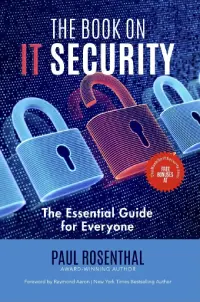
The digital world changes fast. Access the latest security alerts, AI threat breakdowns, and essential updates that keep your knowledge fresh long after you’ve read the book.
IT security is a constantly evolving field. New attacks, scams, and vulnerabilities appear almost daily. Because of this, no security book can ever be truly finished the moment it is published.
However, the fundamental principles of security remain the same. The mindset regarding risk, caution, and data protection doesn’t change from day to day. These very principles form the foundation of this book.
To ensure the information stays current long after publication, I use this page to post updates, new security alerts, real-world examples, and important clarifications. Here, you will find everything that has emerged since publication that I consider essential for understanding and applying IT security in the real world.
Therefore, this website serves as a natural extension of the book—a place where knowledge stays alive and is continuously updated.
Below, you can read the latest additions and insights to help you always stay one step ahead of emerging digital threats
Where to add: In Chapter 3 (The User), within the section Best Practices Users Should Follow. Your book rightly insists on strong passwords, but the tech industry is currently making a major transition toward entirely eliminating passwords in favor of Passkeys technology.
“While strong passwords and password managers are the standard today, the tech industry is rapidly shifting to a new, more secure method: Passkeys. Passkeys allow you to log into accounts using your smartphone’s or computer’s biometrics (like a fingerprint or facial recognition), completely eliminating the need to type and remember text-based passwords. Because a Passkey cannot be intercepted or stolen through standard phishing attacks, whenever a service offers you the option to switch to this technology, you should definitely accept it, as it currently represents the highest level of identity protection available.”
Where to add: In Chapter 3 (The User), right next to the explanation of why two-factor authentication (2FA) is important. It is crucial to warn readers that hackers are now trying to exploit this very protective step.
“Multi-factor authentication (MFA) is an incredibly powerful tool, but attackers have developed a new tactic known as ‘MFA Fatigue’ or ‘prompt bombing.’ If they have stolen your password, the system will send an approval request to your phone. Attackers will trigger this request dozens of times in a row, often in the middle of the night, hoping that you will click ‘Approve’ by accident, in a rush, or out of pure frustration just to make the notifications stop. The golden rule is: no matter how many times you receive a notification, never approve an MFA request on your phone unless you yourself requested to log into the system at that exact moment.”
Where to add: In Chapter 6 (Internet Access) under The Importance of Safe Internet Browsing or in Chapter 8 (IoT) when discussing the mobile phone as the most problematic device.
“In addition to fake links in emails, scams involving malicious QR codes in the physical world (known as ‘Quishing’) are on a massive rise. Scammers print their own QR codes and stick them over legitimate ones on parking meters, restaurant receipts, or even fake parking tickets left on windshields. Their goal is to get you to scan the code with your smartphone, visit a fake website, and enter your credit card information. Before scanning any public QR code, feel the surface to check if a sticker has been placed over it, and carefully inspect the web address that pops up on your screen before confirming that you want to open the site.”
Where to add: In Chapter 12 (Conclusion), under the section AI and Emerging Challenges for Cybersecurity. Today, artificial intelligence can execute scams that seemed like science fiction just a year ago, especially threats aimed at businesses and the elderly.
“Advances in artificial intelligence have introduced frightening new possibilities in the realm of social engineering, the most dangerous of which is highly convincing voice cloning (Audio Deepfakes). Today, hackers need only a few seconds of an audio recording (for example, from a public video you posted on social media) to create software that sounds exactly like you. Because of this, attackers can call your company or elderly family members and, using your voice in a state of artificial panic, demand an urgent money transfer. To defend yourself against this sophisticated threat, establish a unique, secret ‘safe word’ with your family and key coworkers. If someone calls with a suspicious request for money, even if they sound identical to someone close to you, ask for the safe word before making any decisions.”
IT security is not just a technical issue, nor is it a job reserved for experts. Above all, it is a mindset and a daily habit that protects our identity, data, and digital life. If this book helps you better understand the risks, recognize scams, and make safer decisions in the digital world, then it has fulfilled its purpose.
I want you to stay informed, cautious, and secure in a constantly changing technological world. Security begins with knowledge.